
I Used Myself as a Test Subject
Behavioral analytics for studying how learning systems affect retention.
I believe school is a privilege. There is the survival tactic version of it, the pursuit of a credential that unlocks a higher paying job, a more stable life, a clearer path forward. I understand that version. But underneath the common economic logic, there is something else that higher education offers if you are willing to look for it: a structured environment to develop the sharpness of your own mind. To build cognition deliberately and to become a better thinker.
1 Introduction
I had been reading James Clear's Atomic Habits, and one of its central arguments stuck with me: before you can optimize a behavior, you have to first build the identity of someone who does it.
I have the privilege of pursuing higher education, and an obsession with maximizing my potential. In an era with overwhelming mountains of information, and algorithms that typically reflect your mindset, I feel called to explore modern technologies and resources that have never been more accessible. In other words: I have access, I have ambition, and I want to use modern tools deliberately rather than being shaped by them passively
When I enrolled in CS 6040: Intro to Computational Data at Georgia Institute of Technology, I decided to study how I study and to treat myself as both the researcher and the subject, and to build the tools to do it properly.
The short term goal was to receive an A and the long term goal was to build sustainable habits that’d keep me a life long learner throughout my career. I ended up building a full stack behavioral analytics dashboard, like a personal learning operating system. It tracked my study hours daily, logged habits with a color coded calendar for that dopamine driven satisfaction of visible progress, and housed structured knowledge bases for every function, parameter, and syntax pattern I encountered. I engineered AI prompt templates that auto generated schema conformant CSV files, so I could feed new concepts directly into my reference system without friction.
2 Methodology
Every experiment begins with a hypothesis. Naturally, I hypothesized that by maximizing deep study hours and eliminating distractions, I will retain more and perform better. My strategy was structured accordingly.
The plan:
- Six hours of deep study per day
- Daily workouts for natural dopamine regulation
- Reduced work hours to protect study time
- Declined social invitations to preserve focus
I treated these as variables to be controlled. Every day logged, every hour tracked, the data accumulating in real time. More than the grade, I was proving something to myself that I could show up, stay the course, and build the habits of an A student, regardless of how difficult the material became.
3 The midterm: a forced pivot
Without fully realizing it, I was confusing habit formation with learning. They are related, but they are not the same thing.
The midterm did not go the way I wanted.
Before it, my approach was essentially analog intensity: long sessions, deep dives into individual concepts, sprawling notes, and a belief that if I just spent enough time with the material, it would settle into me. I was learning everything thoroughly and in isolation without a clear schema for how all the pieces were supposed to fit together.
After the midterm, I stopped and asked a question I should have asked at the beginning of the semester: how do I actually want to organize what I am learning?
I designed relational spreadsheets for functions, parameters, and syntax each with a consistent schema: method, library, use case, example input, example output. Before starting any new topic, I would pause and decide how it connected to what I already knew
This, it turns out, is exactly what cognitive science recommends. Huberman's work on neuroplasticity draws a distinction I had been violating all semester: the brain doesn't consolidate information during learning because it consolidates during the rest and reflection that follows. New information sticks when it attaches to an existing framework, not when it arrives in isolation. I stopped logging hours and started designing sessions.
4 Results
Figure 1: Daily study hours logged in real time through the dashboard, peaking at 6.5 hours.
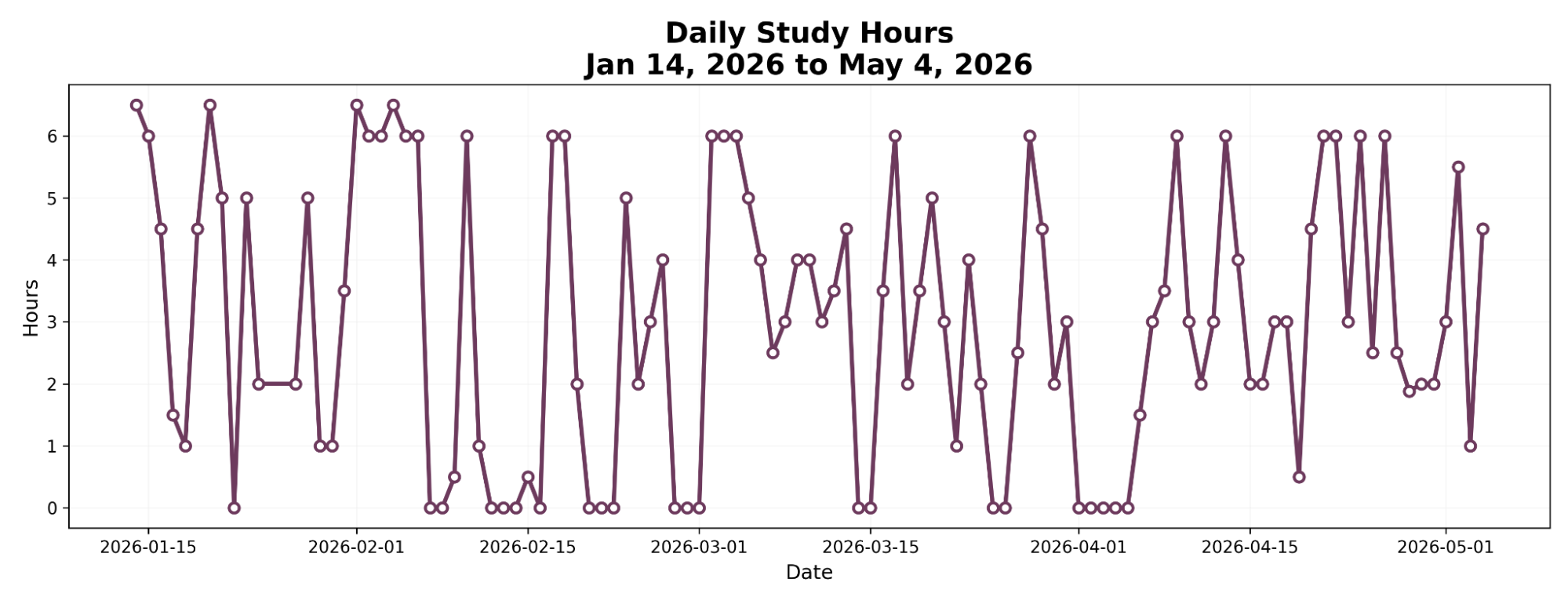
Figure 2: Monthly averages from January to May reveal a dip in February followed by a gradual climb consistent with the psychological pattern of mid semester fatigue before end of semester urgency.
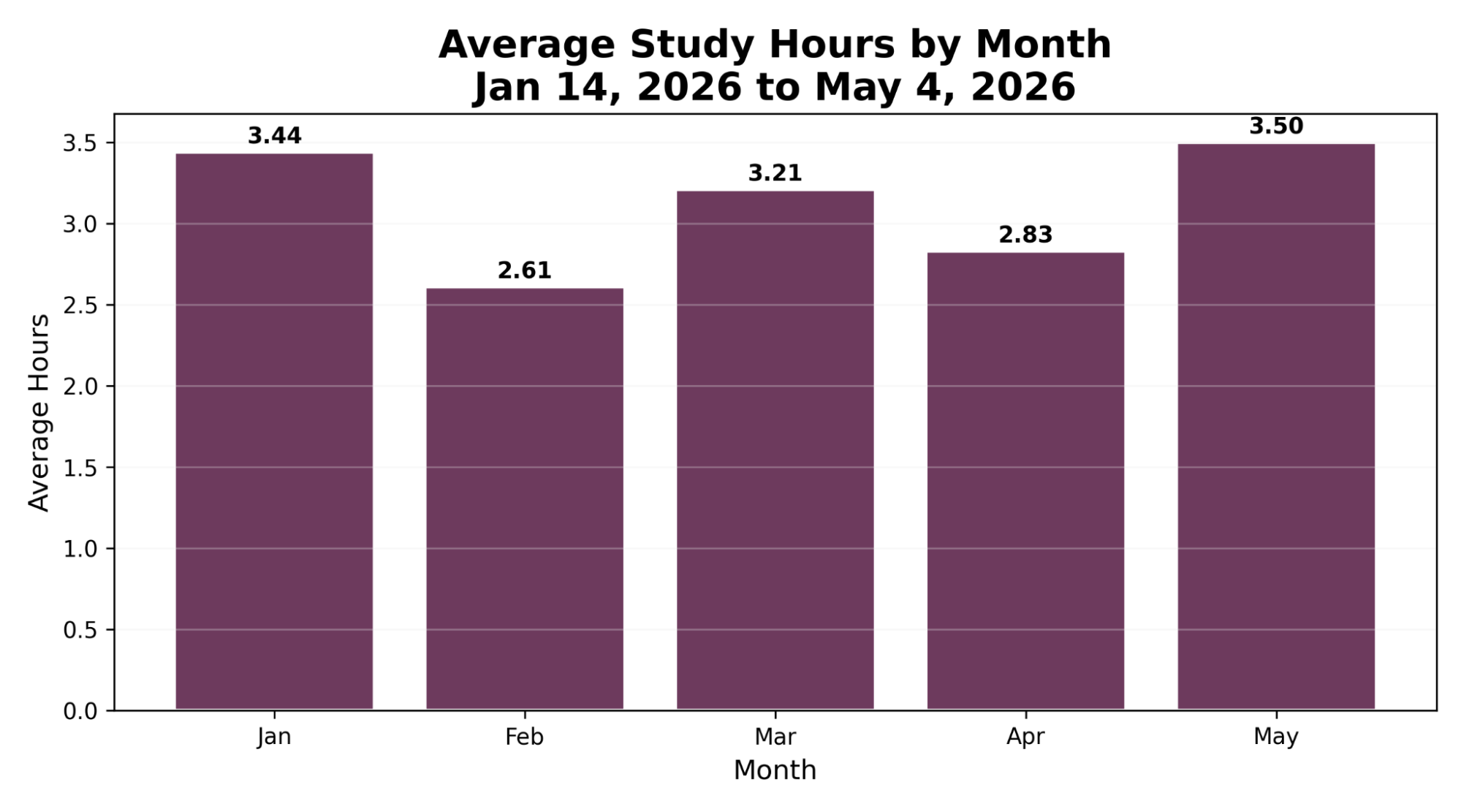
Figure 3: Tuesday consistently dominated with nearly 2.5 hours more per day on average than Sunday.
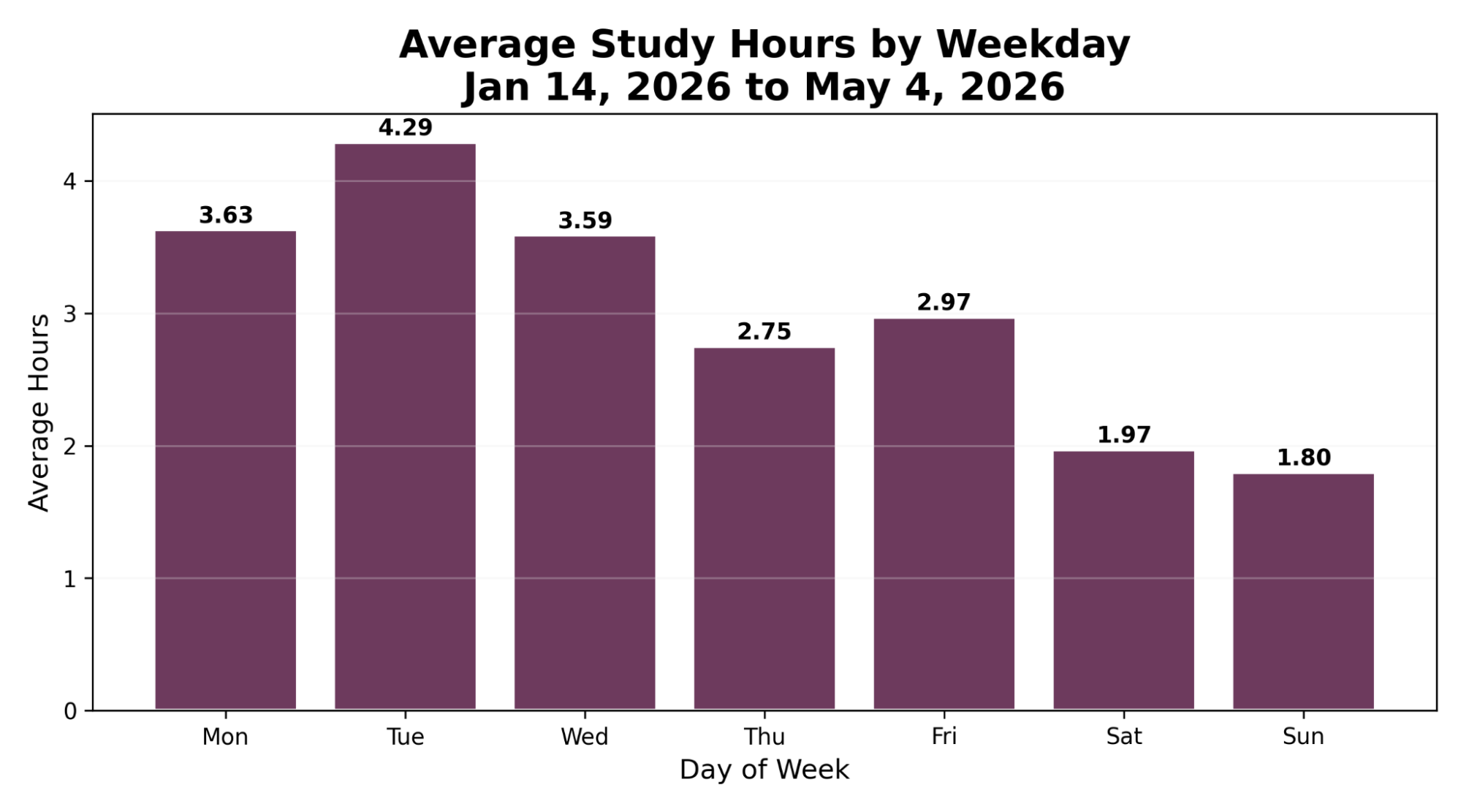
Figure 4: Total hours accumulated per day of the week across the full semester. Tuesday and Wednesday together account for a disproportionate share of productive output.
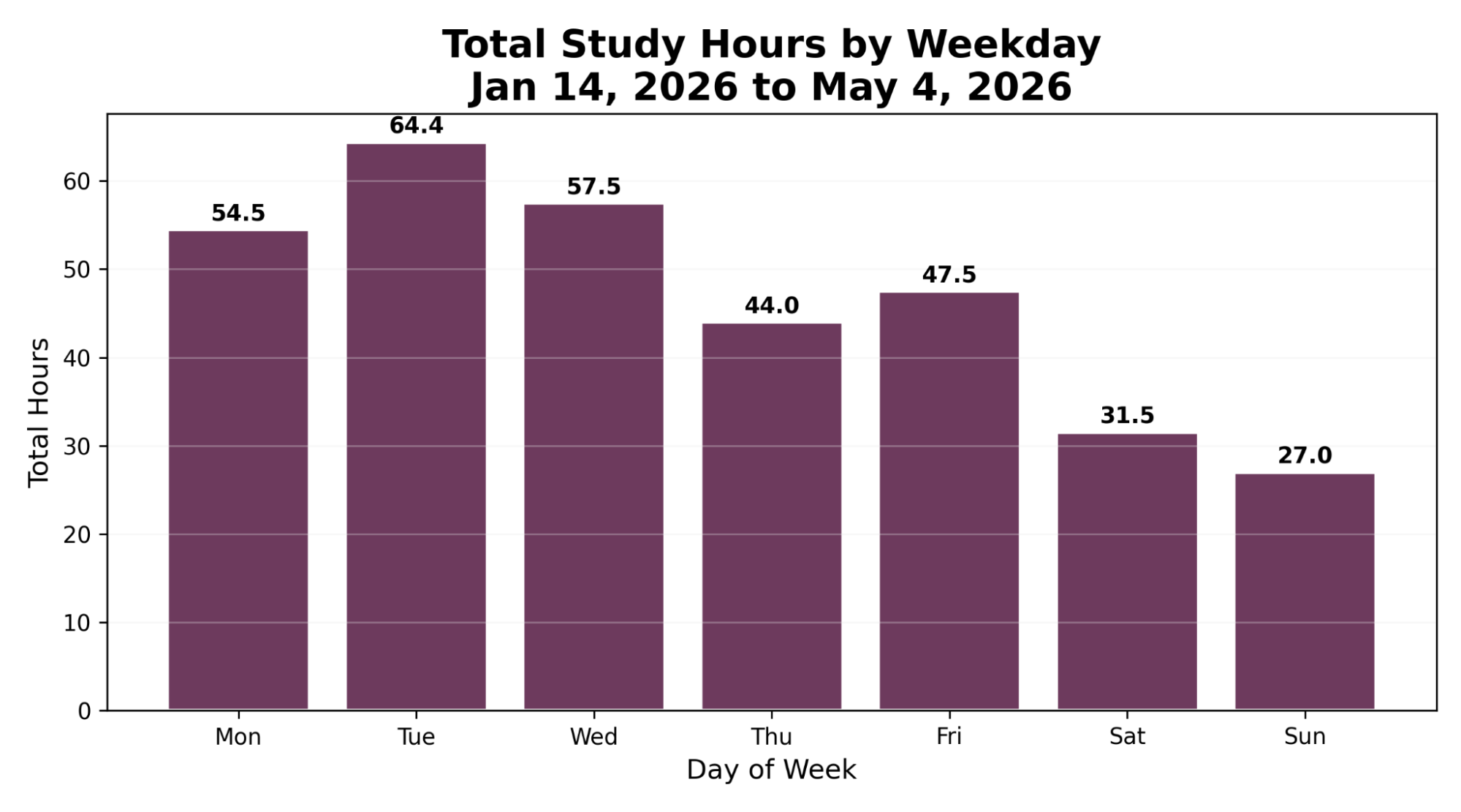
Figure 5: The daily study log, raw and unsmoothed.
5 Findings and Analysis
The data had a clear shape. Figure 1 shows daily study hours peaking at 6.5. Figure 2 captures the arc of the semester a dip in February, consistent with mid semester fatigue, followed by a gradual climb toward finals. Figures 3 and 4 break it down by day: Tuesday and Wednesday together accounted for a disproportionate share of total output, with Tuesday averaging nearly 2.5 hours more per day than Sunday. Figure 5 is the raw daily log, unsmoothed.
I ended up receiving a B over the A I had set myself up for.
I sat with that for a few days. I had cut work hours, declined invitations, and structured a significant portion of my semester around a grade that did not move the way I expected.
What the data could not show was that more hours did not equal more retention, and more isolation did not equal more focus. The time I spent studying past my actual capacity was inefficient and the social connection I had treated as a distraction turned out to be part of what kept me functional.
5 Lessons learned
The real output of this semester was not a grade.
Learning is not a volume problem, it is an architecture problem. The question is never how many hours, but what structure, in what sequence, with what feedback loops, allows a concept to move from exposure into actual understanding. Rote accumulation does not answer that. Structured, system driven engagement does.
Clear writes that every action is a vote for the person you wish to become. I spent the first half of the semester voting for someone who could do six disciplined hours at a desk
What Huberman clarified for me is that the brain is not a hard drive. Retention requires consolidation, consolidation requires rest and spacing, and both require that new information has somewhere structured to land. When I finally designed the schema before consuming the content when I asked where does this belong before asking what is this my recall changed. Not because I was spending more hours, but because I was spending them differently.
I don’t believe the effort in committing time at my desk was wasted because it forced me to reflect on how I studied. I had the commitment, but I was just missing the system.
6 Conclusion
Tracking your own behavior is an act of intellectual honesty. Most people do not know how they actually spend their time, or what conditions make them sharp versus depleted.
I am sharing this because I think there is a version of ambition that gets celebrated publicly. I respect that version.
The more interesting signal, to me, is whether someone can build a rigorous system, run it honestly, and grow from what the data actually says rather than what they wanted it to say.
The experiment is ongoing. I just have a better hypothesis now.
5 Bibliography and Credits
Buch, E. R., Claudino, L., Quentin, R., Bönstrup, M., & Cohen, L. G. (2021). Consolidation of human skill linked to waking hippocampo neocortical replay. Cell Reports, 35(10), 109193. https://doi.org/10.1016/j.celrep.2021.109193
Clear, J. (2018). Atomic Habits: An easy and proven way to build good habits and break bad ones. Avery.
Huberman, A. (2024, August 26). Optimal protocols for studying & learning [Audio podcast episode]. In Huberman Lab. https://www.hubermanlab.com