
Designing a Scalable Community Platform for Georgia Tech Analytics Students
Translating user needs into product requirements, governance systems, and automation for a 500+ member community
Leanne Vu
August 10, 2026
Abstract
This project documents the development of a community platform for Georgia Tech analytics students that grew from an initial course study group into a community of more than 500 members with 36 course specific channels.
As participation increased, requirements expanded beyond academic discussion to include onboarding, information architecture, course discovery and access, governance, moderation, and recurring platform administration. The central product problem became how to support a growing and heterogeneous student community while keeping the platform understandable for members and operationally manageable for moderators.
A product oriented process was used to map member journeys, define minimum platform capabilities, document moderator workflows, establish implementation and success criteria, and identify appropriate opportunities for automation.
1 Problem Definition
The student population represents a range of academic disciplines, professional backgrounds, technical experience, and course schedules. Maintaining a persistent community across courses provided continuity while allowing students to participate in spaces relevant to their individual coursework.
As the community grew, the structure designed for a small study group became increasingly difficult to scale. New problems emerged around:
- onboarding new members;
- communicating platform structure;
- helping members identify relevant course spaces;
- controlling access across an increasing number of channels;
- maintaining consistent community and academic standards;
- updating access as coursework changed; and
- managing recurring administrative work.
This leads to the product problem:
How can a growing community of Georgia Tech analytics students remain organized, understandable, and manageable while supporting different course pathways and changing participation over time?
2 Core Product Requirements and Success Criteria
Two primary user perspectives informed the platform requirements.
Members needed to understand the platform, locate relevant courses, access appropriate discussion spaces, and update their access as coursework changed.
Moderators needed to maintain platform organization, enforce community and academic expectations, administer changing course access, and resolve issues through processes that could scale with membership growth.
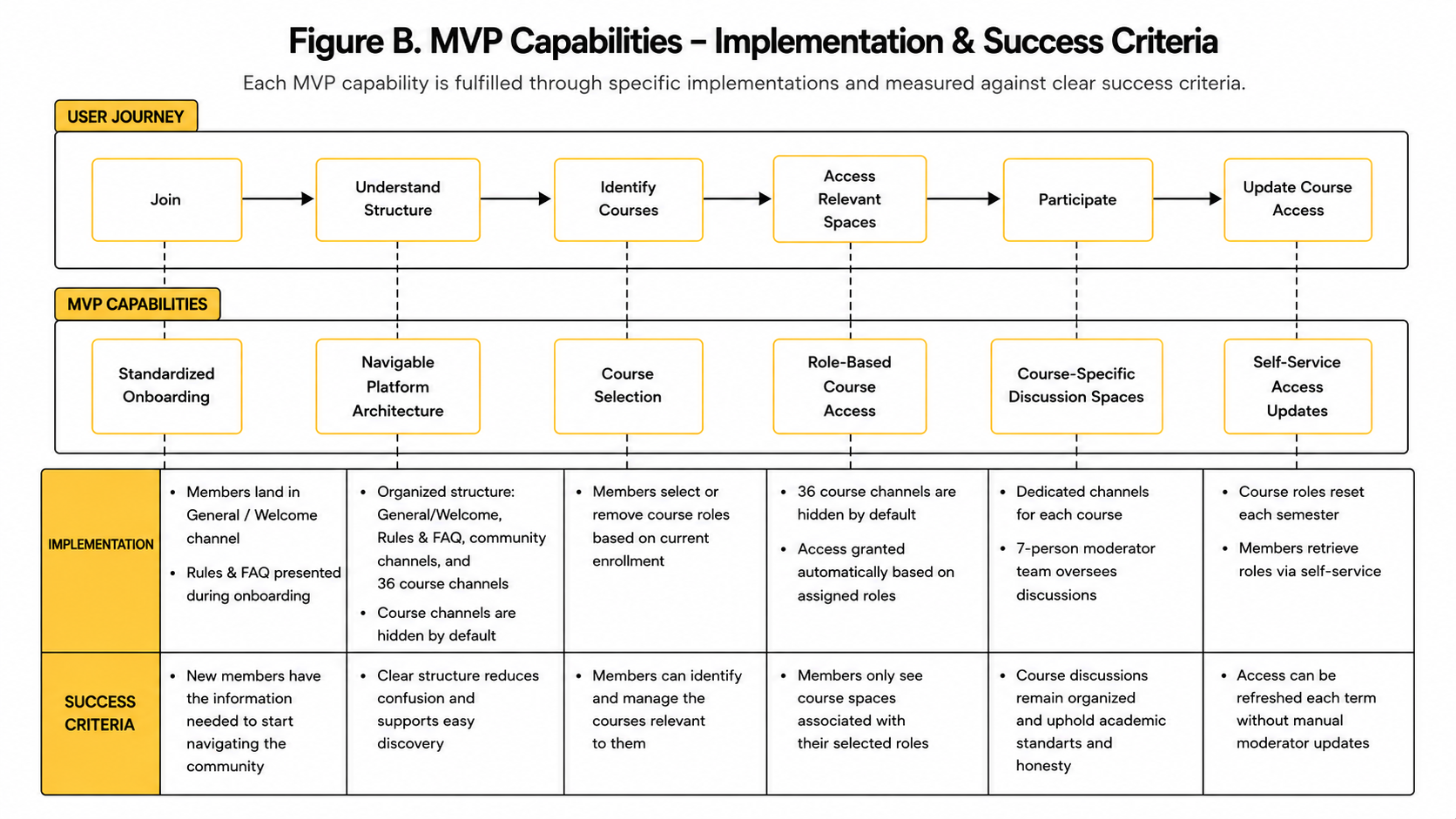
Figure 1 Mapping the member journey to the minimum platform capabilities required to support onboarding, course discovery, access, participation, and continued use.
The Summer 2026 semester shows that 426 roles (members are not restrained to a certain number) were retrieved and the maximum number of unique roles per channel sits at 101 members.
3 Defining Moderator Workflows
As membership increased, moderators were responsible for maintaining access, interpreting community issues, enforcing standards, communicating recurring information, and preserving the platform's organizational structure.
To reduce overhead as the community continues to grow, common moderation processes are documented as workflows.
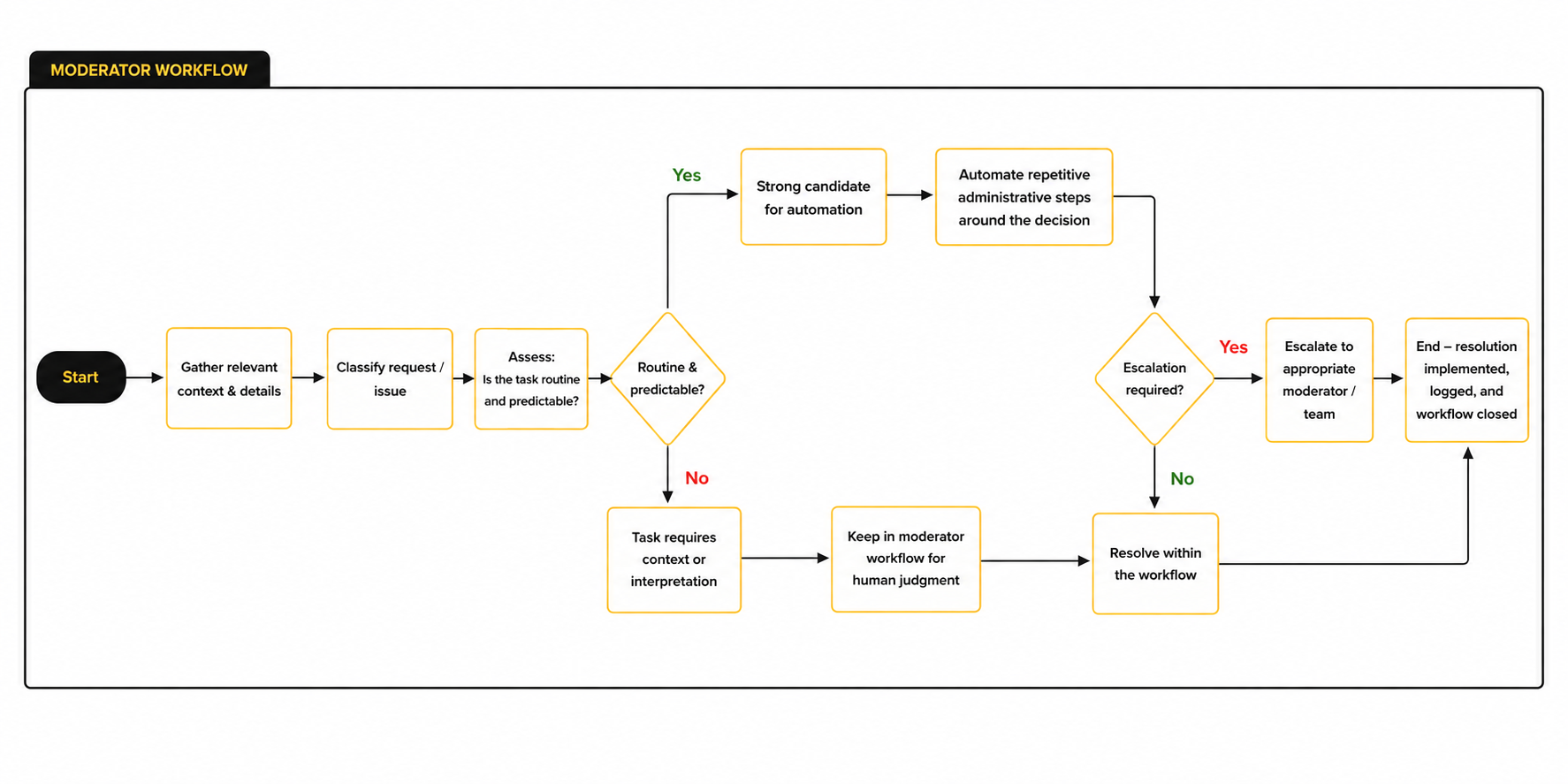
Figure 2 Workflow used to distinguish predictable administrative tasks from decisions requiring contextual judgment, allowing moderators to identify appropriate opportunities for automation.
Tasks with repeatable inputs and predictable outcomes represented stronger candidates for automation. Decisions requiring interpretation or context remained the responsibility of moderators.
4 Implementation: Platform Structure, Governance, and Automation
The community platform is designed around three primary implementation areas: platform structure, governance, and automation.
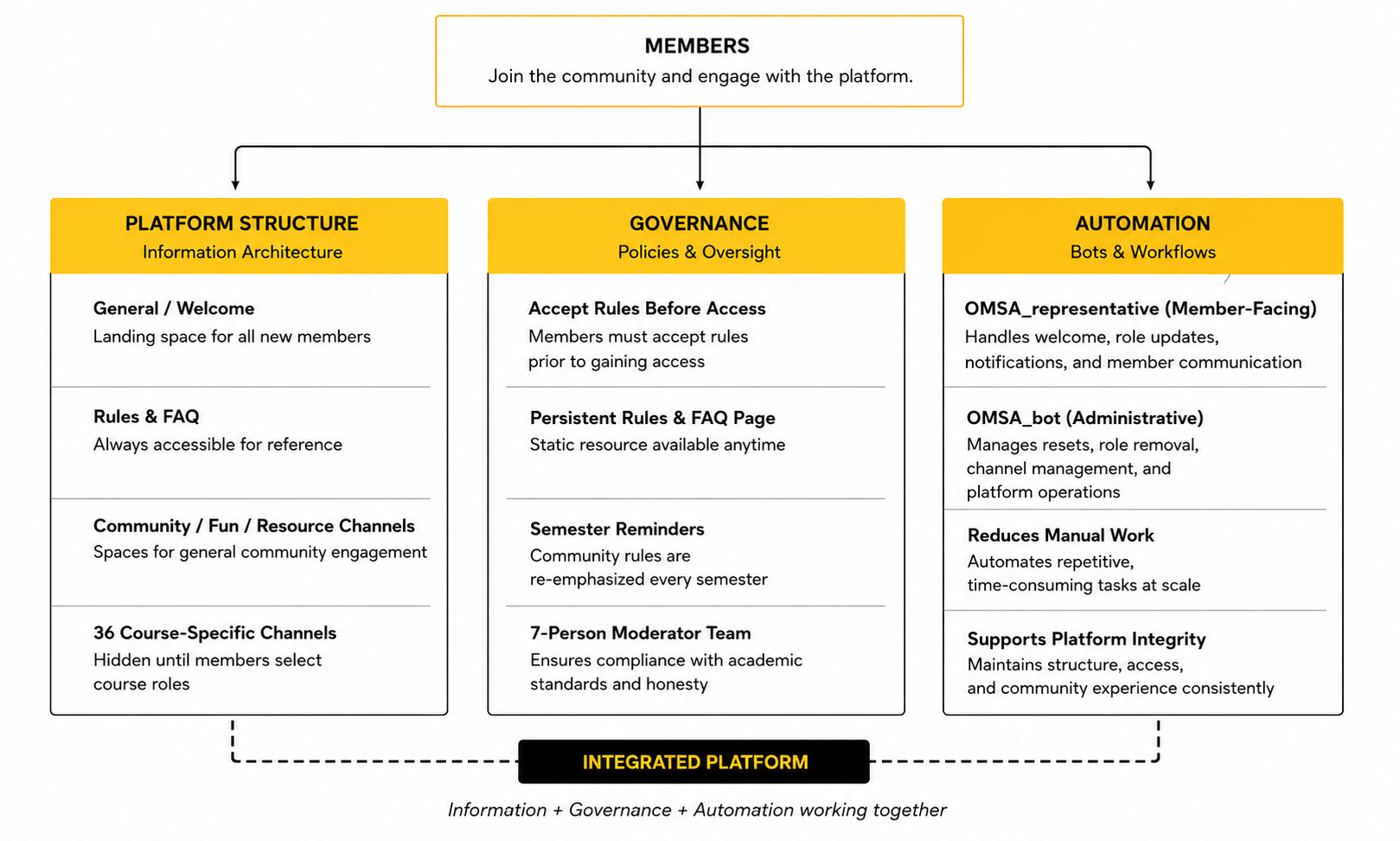
Figure 3 Platform implementation model showing how information architecture, governance, and automation support the member experience and ongoing platform operations.
Platform Structure defines how members navigate and access the community. Shared spaces support onboarding and general participation, while 36 course specific channels remain hidden until members select the corresponding course roles.
Governance establishes consistent expectations for participation and academic conduct. Rules are incorporated into onboarding, remain available for reference, and are reinforced each semester, with a seven person moderator team providing ongoing oversight.
Automation supports recurring member facing and administrative processes. Two bots divide responsibilities between member communication and platform operations, reducing repetitive work associated with course role management, access updates, and semester resets.
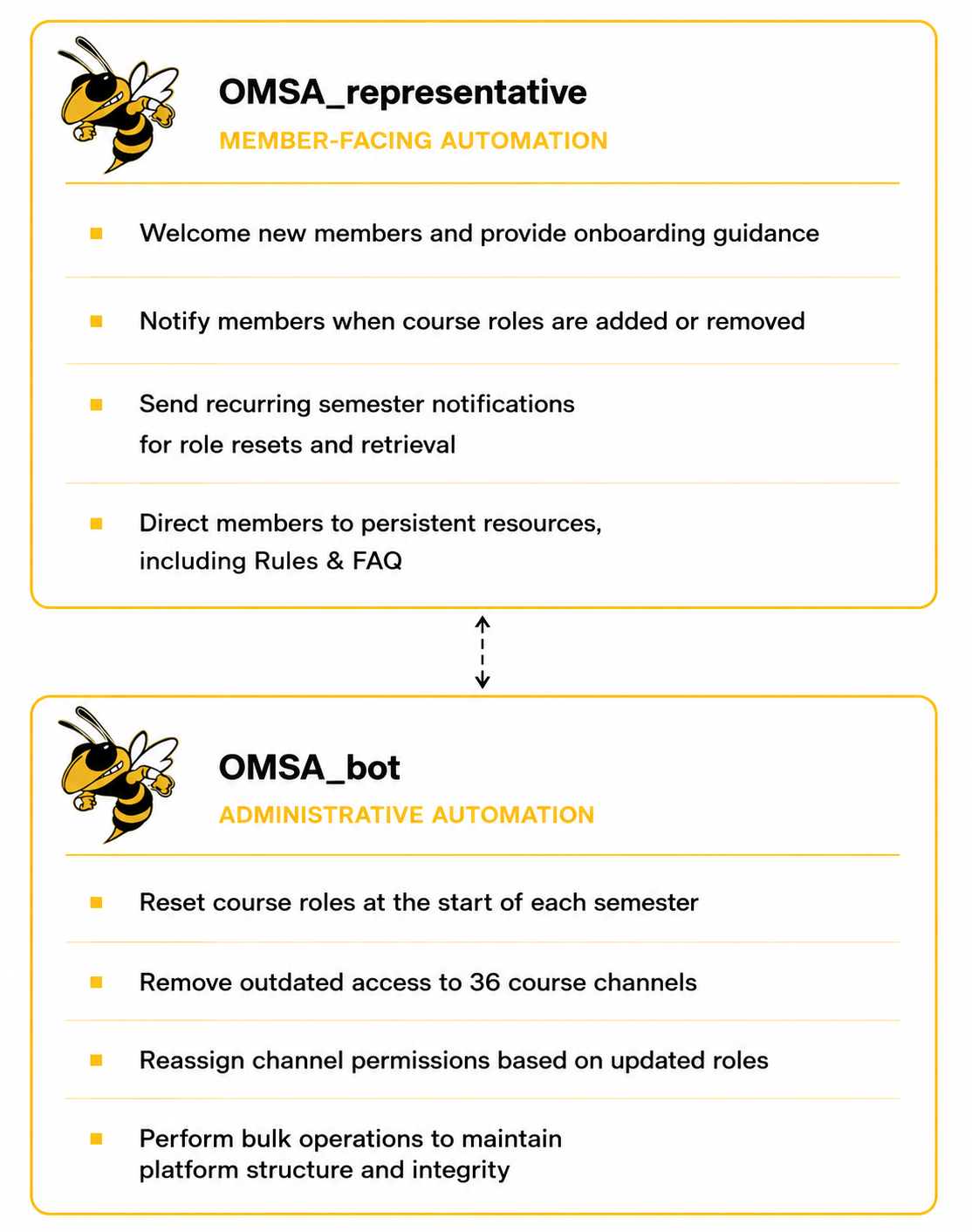
Figure 2 Two bots separate member facing and administrative responsibilities to support platform operations and reduce recurring manual work.
5 Conclusion
The initial requirement was primarily communication. At a greater scale, the requirements expanded to clearly define information architecture, governance, and automation.
User journeys established the minimum member facing capabilities, while moderator workflow analysis helped identify where automation could reduce administrative work.
The resulting approach centered on identifying recurring problems, determining which were important enough to address, translating them into requirements, and evaluating implemented changes as the community continued to grow.